 Dandelion
 Blog
Dust Mite Allergy: Why Your Symptoms May Be Worse at Home
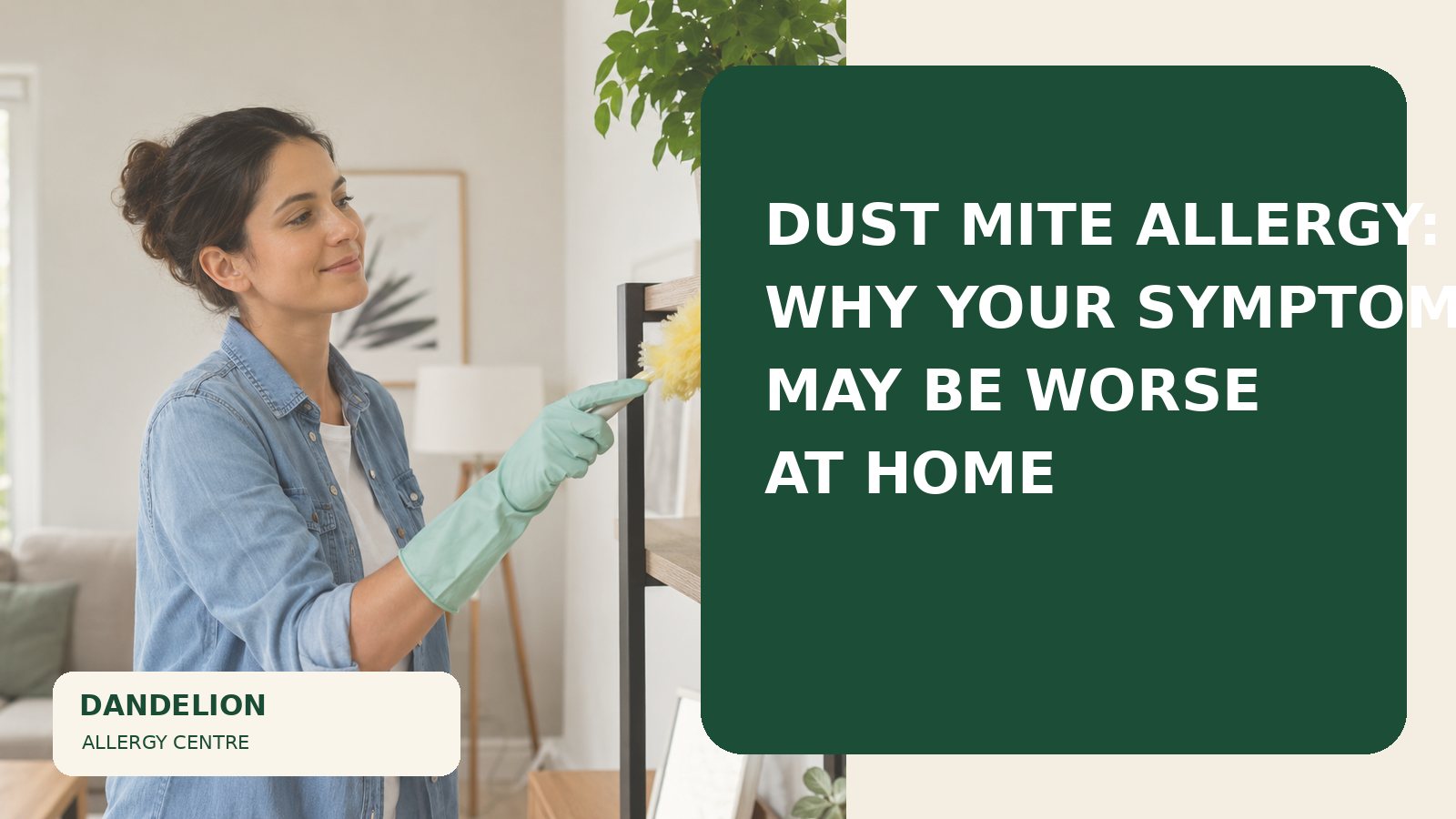
Some people notice their allergy symptoms get worse when they are at home, especially in the bedroom or after cleaning. One common reason is dust mite allergy.
Dust mites are tiny organisms that live in household dust. They are too small to see without a microscope, but they can trigger allergy symptoms in people who are sensitive to them.
What Are Dust Mites?
Dust mites are commonly found in places like mattresses, pillows, blankets, carpets, curtains and upholstered furniture. They survive well in warm, humid environments.
They do not bite, and they are not the same as bed bugs. The problem is that particles from dust mites can trigger the immune system in people with allergies.
Common Symptoms of Dust Mite Allergy
Dust mite allergy can cause symptoms such as:
- Sneezing
- Runny nose
- Stuffy nose
- Itchy nose
- Itchy or watery eyes
- Post-nasal drip
- Coughing
- Poor sleep from congestion
For some people with asthma, dust mites may also worsen coughing, wheezing or shortness of breath.
Why Symptoms Can Be Worse in the Bedroom
The bedroom is one of the most common places for dust mite exposure. This is because dust mites can collect in bedding, pillows and mattresses.
If you wake up congested, sneezy or itchy, dust mites may be one possible trigger. Symptoms may also feel worse after making the bed, vacuuming or dusting because particles can be stirred into the air.
Simple Ways to Reduce Dust Mites at Home
You may not be able to remove dust mites completely, but you can reduce exposure.
Wash Bedding Regularly
Wash sheets, pillowcases and blankets weekly. Hot water and a hot dryer can help reduce dust mites and allergens in bedding.
Use Dust Mite Covers
Allergen-proof covers for mattresses and pillows can help create a barrier between you and dust mites.
Keep Humidity Lower
Dust mites grow better in humid spaces. Using air conditioning or a dehumidifier may help keep indoor humidity lower.
Reduce Dust Collectors
Try to limit items that collect dust in the bedroom, such as extra pillows, heavy curtains, stuffed animals and clutter.
Vacuum and Clean Carefully
Vacuum carpets and upholstered furniture regularly. If cleaning makes your symptoms worse, consider wearing a mask while cleaning or having someone else do it when possible.
Choose Washable Items
Washable curtains, blankets and pillow covers are easier to keep clean than heavy fabrics that trap dust.
When Should You Consider Allergy Testing?
Allergy testing may be helpful if your symptoms keep coming back, affect your sleep or do not improve with simple changes at home.
Testing can help determine whether dust mites, pets, pollen, mould or another allergen may be causing your symptoms.
How an Allergist Can Help
An allergist can review your symptoms, discuss your home environment and recommend testing if needed. Treatment may include avoidance strategies, medications or other allergy treatment options depending on your results.
The Bottom Line
Dust mite allergy is common and can make people feel congested, sneezy and tired, especially at home.
Small changes in the bedroom can make a big difference for some people. If symptoms continue, Dandelion Allergy Centre can help identify your triggers and guide you through the next steps.
This article is for general information only and does not replace medical advice from your healthcare provider.