 Dandelion
 Blog
Patch Testing
What Is Patch Testing?
Understanding Contact Allergies and How We Diagnose Them
If you've ever had a mysterious rash that just won't go away, especially after using a new lotion, wearing certain jewelry, or coming into contact with a specific material, you might be dealing with a contact allergy . One of the most effective ways to identify the cause? Patch testing.
Let’s break down what it is, how it works, and what you can expect.
What Is Patch Testing?
Patch testing is a specialized allergy test used to identify substances (called allergens ) that cause delayed allergic reactions on the skin. These reactions typically appear hours to days after exposure, unlike immediate allergies such as food or pollen allergies.
Patch testing is most commonly used to evaluate conditions like:
- Allergic contact dermatitis
- Chronic or unexplained eczema
- Rashes that don’t respond to typical treatments
How Does Patch Testing Work?
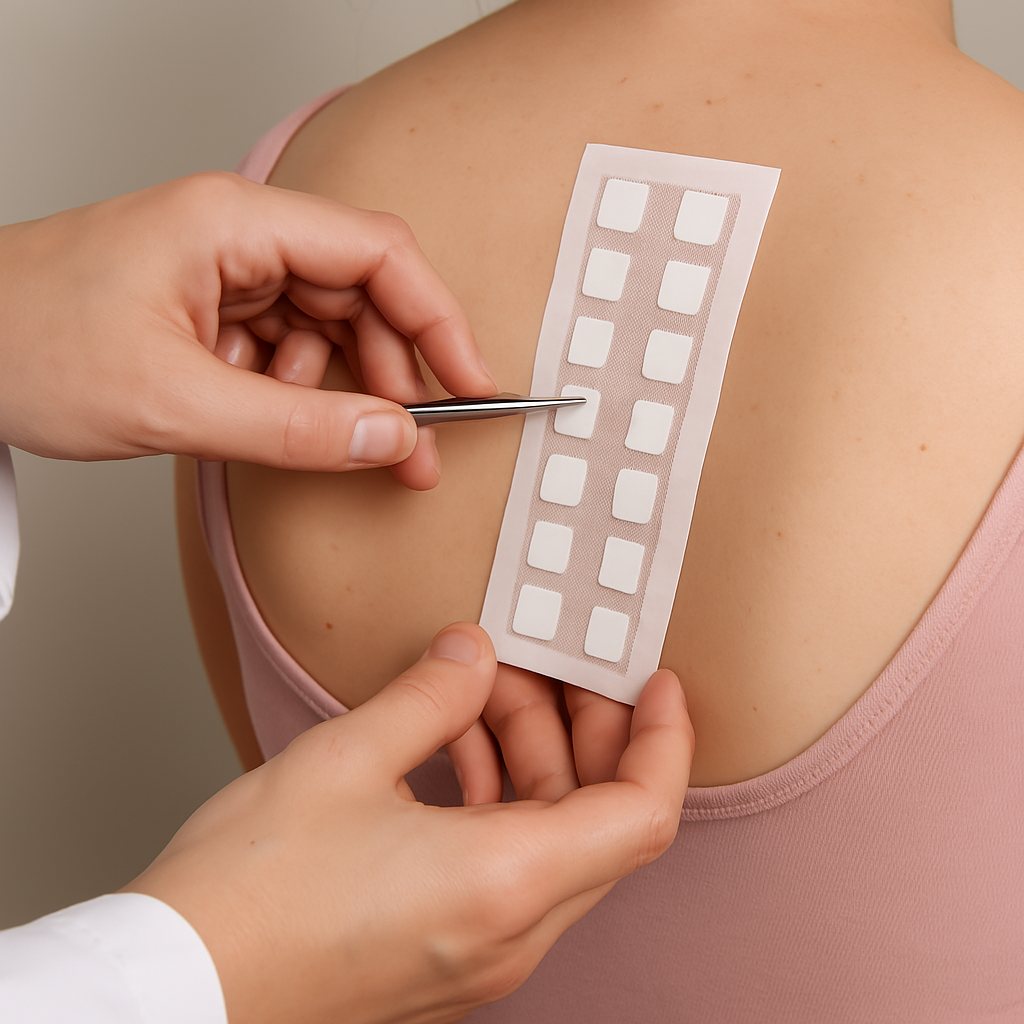
Unlike traditional allergy testing that involves pricking the skin or taking a blood sample, patch testing uses stickers or patches containing tiny amounts of potential allergens. Here's what happens:
Step-by-Step:
- Application Day (Day 1) A clinician places patches (usually on your back) that contain a variety of substances like fragrances, preservatives, metals, and rubber compounds.
- Wear Period (Days 1 to 3) You wear the patches for 48 hours . No showers, heavy sweating, or activities that could cause the patches to peel off.
- First Reading (Day 3) The patches are removed, and the skin is examined for signs of a reaction, such as redness, swelling, or blistering.
- Second Reading (Day 5 to 7) A follow-up check is done a few days later to catch delayed reactions that show up after the initial reading.
What Is Being Tested?
We test you against:
- The North American 80 Comprehensive Series , a standard set of 80 common allergens
- More info for the series we use can be found here https://dormer.com/product/north-american-80-comprehensive-series/
Is Patch Testing Safe?
Yes. Patch testing is very safe and well-tolerated. The amount of allergen is so small it won’t trigger a dangerous reaction, but just enough to cause a small skin reaction if you're allergic.
How Do I Prepare?
- Stop using corticosteroid creams on your back at least 1 week before testing
- Avoid sunburn or tanning on your back prior to the test
- Inform your doctor about all medications you're taking, especially immunosuppressants
- Wear loose clothing for comfort during the testing period
Why Is Patch Testing Important?
Understanding your specific contact allergies can help you:
- Avoid triggers more effectively
- Choose safer personal care products
- Improve chronic rashes or eczema that don’t respond to treatment
- Take control of your skin health
Final Thoughts
If you're struggling with ongoing rashes or skin irritation, patch testing might provide the answers you need. It’s a powerful tool to help tailor your care, identify triggers, and improve your skin’s health for the long term.
Want to know if patch testing is right for you?
Have your family doctor send us a referral. Click here (https://drive.google.com/file/d/1kNrsk1uz5Fg8uIFyWRUJEKTJ426KOE4A/view?usp=share_link) link to download our referral form if needed.